

archive https://archive.is/6rPL5
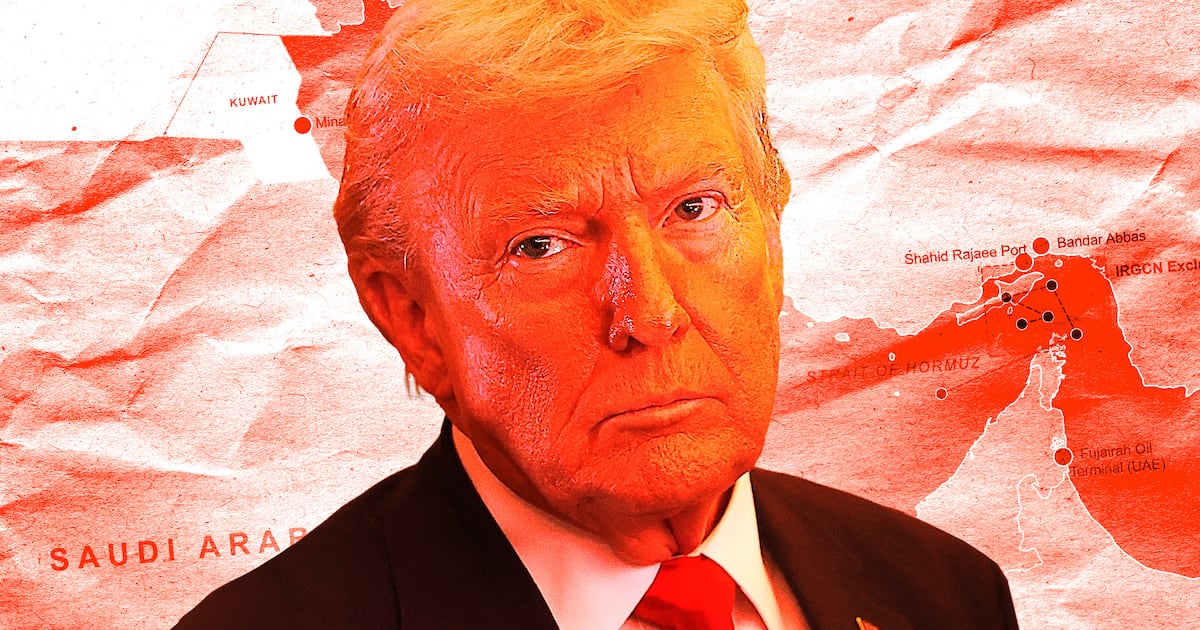
Gen. Dan Caine, the chairman of the Joint Chiefs of Staff, repeatedly warned Trump that Iran would likely disrupt the Strait of Hormuz in response to a U.S. attack, according to a new report in the Wall Street Journal.
Trump, 79, told his administration that he thought Iran would capitulate to the U.S. before it closed the Strait, adding that even if the Strait was threatened, the U.S. military could handle it.
We fucking got our asses kicked in smaller countries like Vietnam, Iraq, and Afghanistan.
Who would have thought the US could win against Iran?
The biggest mistake they made was thinking Iran is like Iraq, Syria, or Afghanistan—countries characterized by dictatorship or clannism/tribalism, where the populations were already divided. Although it is an Islamic Republic, Iran operates as a republic with regular elections where citizens vote for government officials. This is a long-established system that maintains a degree of popular support. Unlike those other states, where it was easier for outside forces to support separatists, the current situation has instead bolstered the government’s narrative. They have effectively managed to convince many that the government was telling the truth about the U.S. and Israel intending to destroy Iran. Ultimately, this has united a large portion of the population behind the state. I fear it will be a long conflict unless something fundamental changes.
Candidates for office are vetted by a government committee before they can run. It’s a one-party state. Even the Demopublican virtual uniparty in the US is a far more open system. And the Islamic Republic is almost uniformly hated by the Iranian people, most of whom were born after Khomeini seized power.
I’m not in any way implying that US bombing or invasion is going to help the pro-democracy forces in Iran. If anything, it’ll give the mullahs the external threat that they need in order to cling onto power even longer.
While the mechanisms obviously differ, candidate vetting and political gatekeeping are structural realities in the U.S. system as well. Instead of a Guardian Council, the U.S. relies on immense financial barriers—where winning a Senate seat averages over $20 million—and restrictive ballot access laws that effectively lock out third parties. Therefore, arguing that one system is “open” and the other is “closed” is often an apples-to-oranges comparison that ignores how power is actually brokered. Furthermore, not every country requires a Western-style liberal democracy to maintain a stable and cohesive existence.
As for the claim that the government is “uniformly hated” by the Iranian people: if that were entirely true, who is keeping the state functioning? A massive state apparatus cannot survive for four decades under intense external pressure solely through coercion; it requires a substantial base of active domestic support. The state is backed by millions of active Basij members and a vast network of state economic foundations (Bonyads) that employ and provide social welfare for millions more. Even in recent elections with historically low turnout, roughly 25 million Iranians still participated.
The narrative that the population is a monolith of dissent often stems from the grievances of the Iranian diaspora, who fled the country during the Islamic revolution some 40 years ago. While their perspectives are part of the story, they do not necessarily reflect the complex realities of the 88 million people currently living inside the country. For example, Iranian Azerbaijani Turks—the country’s largest ethnic minority, numbering roughly 20 million—have shown no widespread intention of mounting a separatist revolt. They are deeply integrated into Iran’s economic and political elite (the Supreme Leader himself is of Azerbaijani descent) and share the state’s Shia identity. This integration alone contradicts the idea of a nation on the verge of internal collapse due to the people’s hatred of their government.
In the long run, it is difficult to predict how the population will react to the scarcity of food and basic needs. However, that does not change the fact that there has been a united domestic response to recent attacks—a level of support for the Iranian government that was clearly not anticipated by either the U.S. or Israel.
Ultimately, unless it is in self-defense, war is murder. I wish peace and prosperity for all.