

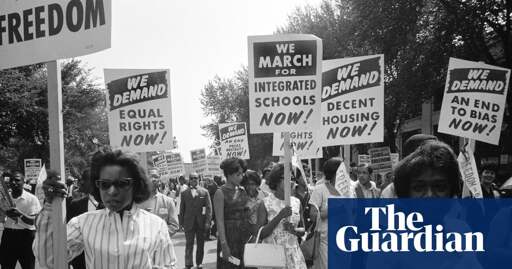
From emancipation to women’s suffrage, civil rights and BLM, mass movement has shaped the arc of US history
Trump’s first and second terms have been marked by huge protests, from the 2017 Women’s March to the protests for racial justice after George Floyd’s murder, to this year’s No Kings demonstrations. But how effective is this type of collective action?
According to historians and political scientists who study protest: very.
From emancipation to women’s suffrage, from civil rights to Black Lives Matter, mass movement has shaped the arc of American history. Protest has led to the passage of legislation that gave women the right to vote, banned segregation and legalized same-sex marriage. It has also sparked cultural shifts in how Americans perceive things like bodily autonomy, economic inequality and racial bias.
There have been a small number of cases where revolutions happened without the threat of violence lurking in the wings. Portugal’s driving out its generals was one. But yeah, it’s much more common for there to be a militant uprising alongside a more peaceful group, and then good cop/bad cop is the game to be played. Indian independence went like that. So did the US civil rights movement, which wasn’t a revolution, but which did achieve significant social change, even if it was slowly rolled back starting in the 80s.