Microsoft is raising prices on all its current Surface PC offerings, with the midrange devices now starting at above $1,000, and flagships starting at $1,500.
I love my Surface Snapdragon X. Battery life up the wazoo and I use it largely as a thin client to windows and linux systems so it lasts forever.
I did debloat it heavily though.
And someone will probably say why not install Linux on it, to which I say…for everything I use I’ve yet to find a Linux distro that works without hours of custom efforts. I work 7 days a week and don’t have time to dive down rabbit holes every day to fix shit like my mouse, or my bluetooth ear buds, or RDP, or parsec, or nomachine, or wifi.
ive been using Linux for 20 years. my assumption is that your barrier is tedious linux usability problems.
my suggestion specifically would be to give it research powers and regular non-root access, have it write configs and answer questions about your system, suggest alternative packages to install etc.
Alright, I’ll give this a go on a VM first. If it can solve my RDP-like issues I’ll be supremely happy - but to my knowledge, Linux just doesn’t support such a thing the way I want to use it.
I’ll test this on Ubuntu, Mint, Pop, and Debian to start but let me know if there is a distro you recommend.
i am an extreme fan of arch, even if for no other reason than the AUR
im not sure about rdp but i remember vnc being the cross platform standard years ago. i have a comet wifi kvm giving me access to a mac mini because i need it for certain tools
I had this impression as well, until I had to troubleshoot some problems I was having with the screen. Did not give it root access, but it run a bunch of analysis on the system and within a few minutes it was spitting out configuration files that I just had to copy in the correct directories.
Doing the same myself would have taken me a day on the arch wiki.
I’ve been using Linux for years, when I was on X I was editing the Xorg.conf without looking up the documentation. If you know exactly what the problem is, you’ll fix it faster that way.
However, if you don’t troubleshoot many systems often it is unlikely that you have a structured approach to identifying the problem. LLMs can be quite organised in doing that.


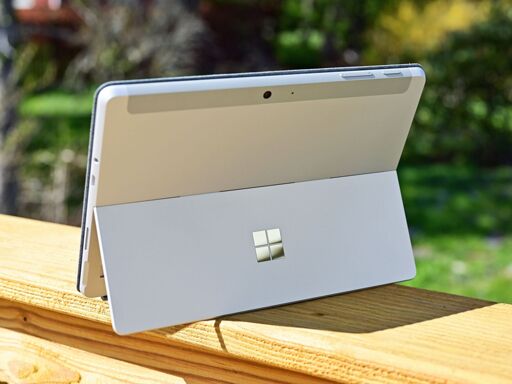
I love my Surface Snapdragon X. Battery life up the wazoo and I use it largely as a thin client to windows and linux systems so it lasts forever.
I did debloat it heavily though.
And someone will probably say why not install Linux on it, to which I say…for everything I use I’ve yet to find a Linux distro that works without hours of custom efforts. I work 7 days a week and don’t have time to dive down rabbit holes every day to fix shit like my mouse, or my bluetooth ear buds, or RDP, or parsec, or nomachine, or wifi.
install the terminal version of claude code and ask it to configure your computer for you. you might think I’m joking until you do this
Go ask the robot to bang your wife for you.
If ever going to try this, ask to make it a script fully explained, then read it and fully backup before you run.
Yeah…no. I leverage AI tooling daily, but I’m not about to go that far.
ive been using Linux for 20 years. my assumption is that your barrier is tedious linux usability problems.
my suggestion specifically would be to give it research powers and regular non-root access, have it write configs and answer questions about your system, suggest alternative packages to install etc.
Alright, I’ll give this a go on a VM first. If it can solve my RDP-like issues I’ll be supremely happy - but to my knowledge, Linux just doesn’t support such a thing the way I want to use it.
I’ll test this on Ubuntu, Mint, Pop, and Debian to start but let me know if there is a distro you recommend.
i am an extreme fan of arch, even if for no other reason than the AUR
im not sure about rdp but i remember vnc being the cross platform standard years ago. i have a comet wifi kvm giving me access to a mac mini because i need it for certain tools
I had this impression as well, until I had to troubleshoot some problems I was having with the screen. Did not give it root access, but it run a bunch of analysis on the system and within a few minutes it was spitting out configuration files that I just had to copy in the correct directories.
Doing the same myself would have taken me a day on the arch wiki. I’ve been using Linux for years, when I was on X I was editing the Xorg.conf without looking up the documentation. If you know exactly what the problem is, you’ll fix it faster that way. However, if you don’t troubleshoot many systems often it is unlikely that you have a structured approach to identifying the problem. LLMs can be quite organised in doing that.